

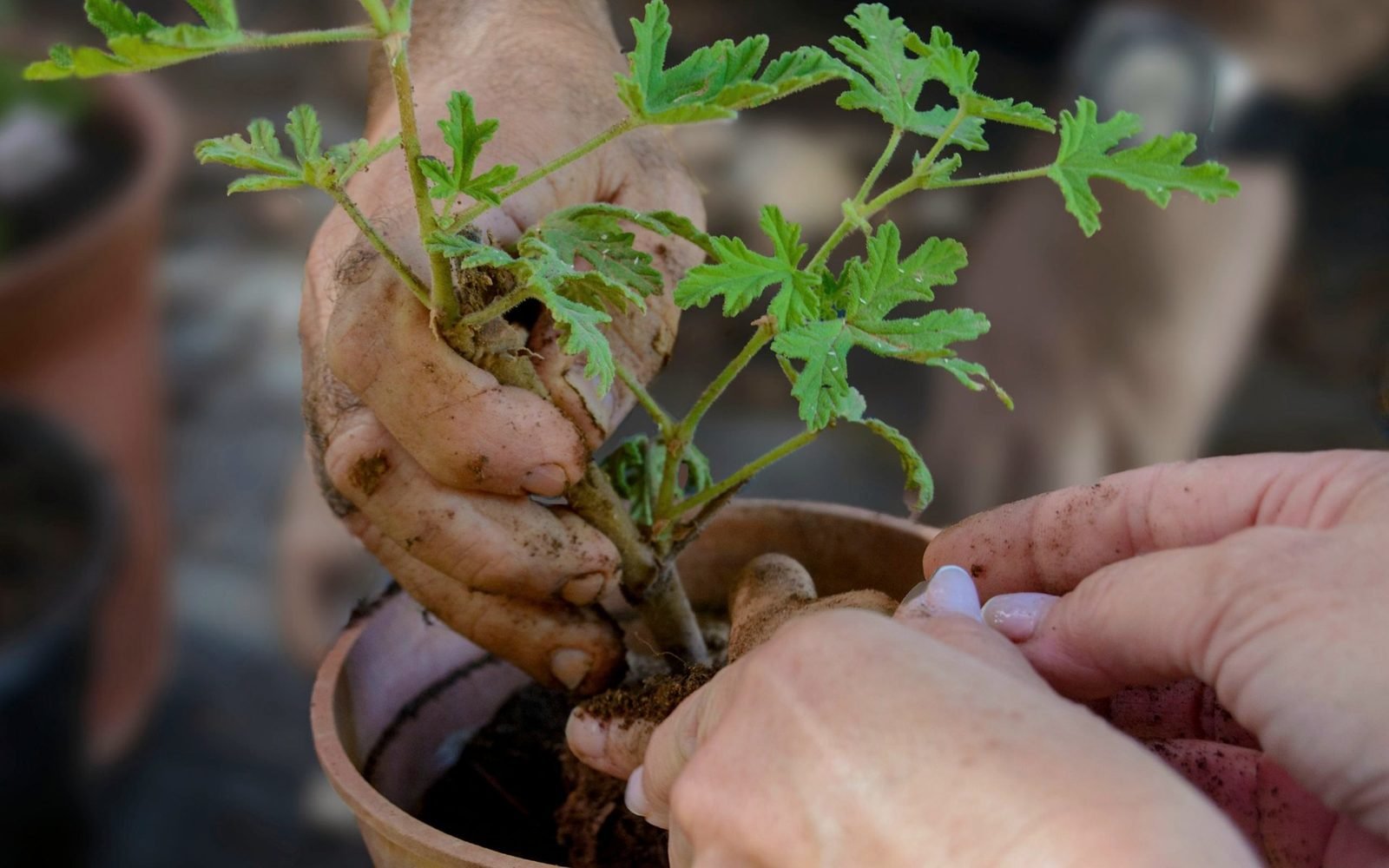
Plants outgrow their pots. Repotting gives roots more room and fresh soil, and it is easier than it looks.
Know the signs
Roots growing out of the drainage holes, soil that dries out very quickly or a plant that seems top-heavy can all suggest it is time. Slow growth alone is not always a reason.
Choose the right time
Spring and early summer are usually best, when most plants are growing. Avoid repotting a plant in flower unless it is necessary.
Pick the pot
Choose a pot only a little bigger than the current one, about two to five centimetres wider. A much larger pot holds extra wet soil and can lead to rot. Make sure it has drainage holes.
Prepare the soil
Use a potting mix suited to the plant, such as a free-draining mix for succulents. Do not use garden soil, which can compact in a pot.
Remove the plant carefully
Water the plant a day beforehand, then tip the pot sideways and ease the plant out. Gently loosen circling roots with your fingers and trim any that are black or mushy.
Plant and settle
Place a layer of mix at the bottom, set the plant so the base of the stem sits at its previous level, and fill around the sides. Press lightly and water well.
Aftercare
Keep the plant out of harsh direct sun for a week or two. Wait a few weeks before feeding, since fresh mix usually contains nutrients.



