You have one sunny kitchen sill, a few spare pots, and a history of supermarket basil that wilted inside a fortnight. If you want to grow herbs on a windowsill and still have them thriving in a month, the job comes down to three things: enough light, a pot that drains, and watering that follows the soil rather than the calendar. This guide covers each one, using the figures published by US university extension services and the UK’s Royal Horticultural Society (RHS).
Grow herbs on a windowsill: start with the light
How many hours of sun herbs need
Light is the limit on almost every indoor herb. Iowa State University Extension says that most herbs need around eight hours of direct light a day indoors, and that a sunny south-facing window is the best candidate, with a bright east or west window also workable. University of Illinois Extension sets the floor a little lower, at at least six hours of direct sunlight, and warns that without strong light the plants turn leggy and spindly.
So the working range is six to eight hours. Measure it rather than guessing. On a clear day, note the time the sun first lands on the sill and the time it leaves.
Example: sun reaches your window at 10am and slides off it at 2pm. That’s four hours of direct light, two short of the lower figure. Windows with a tree or a neighbouring building in the way often work out like this. A four-hour window can still hold the tougher herbs for a while, but you should expect stretched stems on basil, and you should plan for the grow-light option below.
When the window falls short
Both universities give a similar recipe for supplemental light. Iowa State suggests putting a light on a timer for 12 to 16 hours a day with the bulbs 6 to 12 inches (about 15 to 30cm) from the leaves. Illinois gives 12 to 14 hours for fluorescent lighting at the same distance. The overlap is 12 to 14 hours at 6 to 12 inches.
Example: a plug-in timer set to switch on at 7am and off at 9pm gives 14 hours. Set the light height with a ruler, not by eye, and raise it as the plants grow.
Illinois also advises keeping plants away from heat vents, which dry them out. A sill above a radiator is a poor spot even when the light is good.
Which herbs to start with
Iowa State’s indoor list includes parsley, mint, chives, basil, oregano, cilantro and thyme. Illinois lists chives, basil, sage, parsley, thyme, oregano, mints and rosemary. Pick two or three you actually cook with. The table pulls out what each source says about watering and harvest.
| Herb | Watering note | Pot note | Harvest note |
|---|---|---|---|
| Basil | Keep evenly moist; water in the morning, since basil dislikes wet roots overnight (RHS) | Warm, bright spot (RHS) | Pick the shoot tips regularly to keep it bushy (RHS) |
| Mint | Pots dry out faster than open ground, so check often (RHS) | Its own pot, because it spreads quickly (RHS) | Snip as needed |
| Rosemary | Never let the soil dry out completely (Illinois Extension) | Free-draining mix | Trim often to keep it compact |
| Sage | Prefers the soil to dry out, short of wilting, before the next drink (Illinois Extension) | Free-draining mix | Trim often |
| Parsley and cilantro | Let the soil dry between waterings (Iowa State) | Pot with drainage holes | Cut stalks at the base of the plant (Illinois Extension) |
| Thyme, chives, oregano | Let the soil dry between waterings (Iowa State) | Terracotta suits herbs because it dries out readily (Iowa State) | Cut a few inches down the stem |
Two of those rows pull in opposite directions. Rosemary hates a dried-out pot and sage tolerates one. Putting them in the same planter means one will always be wrong, so give each herb its own container.
Pots, drainage and soil
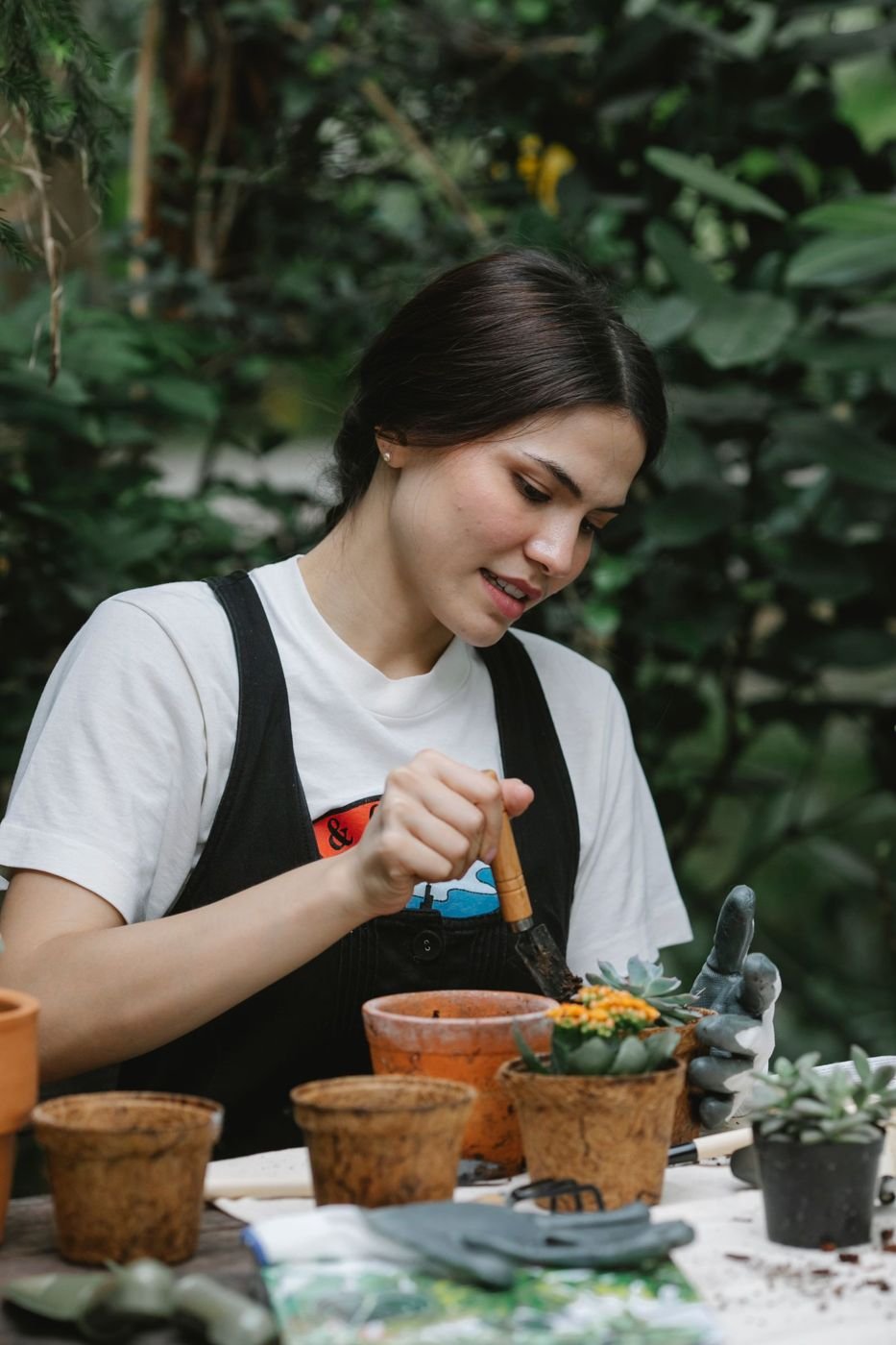
Iowa State’s advice is short: containers need good drainage and a well-drained potting mix. Holes in the base are non-negotiable, and a saucer underneath protects the sill. A decorative pot with no hole is fine as an outer sleeve only, with the plastic nursery pot lifted out for watering and put back once it has drained.
Terracotta, which Iowa State describes as porous so that it dries out more readily, is forgiving if you tend to overwater. Plastic holds moisture longer, which suits a sill that gets hot afternoon sun and a person who’s out all day.
Use bagged potting mix labelled for containers, not soil dug from a garden. For thirstier or drier herbs, adjust by watering rather than by mixing your own blends. Mint goes in a pot of its own because the RHS says it spreads quickly and is best grown in a pot rather than the ground.
Watering by the soil, not the day
The extension advice is consistent: allow the soil to dry between waterings, because most herbs do not tolerate wet soil. Over-watering is a common way for a beginner’s sill to fail, and the symptom (drooping, yellowing) can look like thirst, which tempts people to water more.
- Push a finger into the mix up to the first knuckle.
- If it’s dry at that depth, water slowly until water runs from the holes. If it’s damp, wait a day and check again.
- Let the pot drain, then tip out whatever sits in the saucer.
- Water basil in the morning where you can.
- Keep rosemary on a slightly shorter leash than sage, per the table above.
A herb that droops in damp soil needs less water, not more.
Harvesting so the plant grows bushier
Regular cutting is part of the care, not a reward for it. Illinois Extension says to trim the plants often so they stay compact and to prevent flowering, and to cut a few inches down the stem rather than picking off single leaves. Iowa State agrees that most herbs do well with periodic snipping as the kitchen needs them. The RHS tells basil growers to harvest the shoot tips regularly to keep plants bushy and productive.
Pinching basil, step by step
- Find a stem with at least three pairs of leaves.
- Locate the pair of tiny leaves at the very top, and the pair of leaves just below the tip.
- Pinch or snip just above a lower pair of leaves, removing the tip.
- Two new shoots will grow from the joint below the cut. Repeat on those when they’ve made two or three pairs.
Take only some of the plant at once. A stripped stem recovers slowly in low light. Leave plenty of leaves, and cut for cooking just before you need it.
Feeding, and the one place the sources disagree
Iowa State recommends fertilising from early spring through summer, skipping the winter months, with an all-purpose product at half or quarter strength. Illinois suggests a liquid feed every two weeks, following the label, while noting that over-feeding can reduce aroma and taste. The cautious reading is to follow the Iowa State schedule: weaker feeds, only while the plants are actively growing. A herb you cook with is grown for flavour, and a lean feed protects that.
Starting from seed or from a plant
A small plant from a garden centre or supermarket saves weeks. If you’d rather start basil from seed, the RHS suggests sowing from March through July in small pots of damp peat-free seed compost, in warm conditions, and says seeds germinate well at around 20°C (68°F). Those dates are for the UK, so shift them for your climate. Indoors you can sow later in the year, provided the sill is warm and bright.
Basil is short-lived and gets tired as it matures. Sowing a fresh pot every three to four weeks keeps a succession going. That interval is practical advice rather than a published figure.
Your windowsill checklist
- Measured how many hours of direct sun the sill gets (aim for six to eight)
- Chosen two or three herbs you cook with, each with its own pot
- Pots with drainage holes and a saucer
- Container potting mix, not garden soil
- Grow light on a timer for 12 to 14 hours if the sun is short, 6 to 12 inches above the leaves
- Plants kept away from radiators and heat vents
- Finger test before every watering
- Regular snipping, a few inches down the stem
- Half-strength feed during the growing season only
Common mistakes
The first is putting rosemary and mint in the same long trough with a tidy row of other herbs. Their water needs differ, and mint will take over the container.
The second is watering on a schedule. A Sunday-evening soak suits a plant in July and drowns it in February, when light and growth are lower.
The third is picking leaf by leaf from the bottom. That leaves a bare, tall stem with a tuft at the top, the opposite of what you want.
The takeaway
Count the hours of sun first, add a timer-controlled light if you have fewer than six, and give every herb a draining pot of its own. Water when the soil has dried to your knuckle, cut a few inches off the tops often, and feed lightly while the plants are growing.