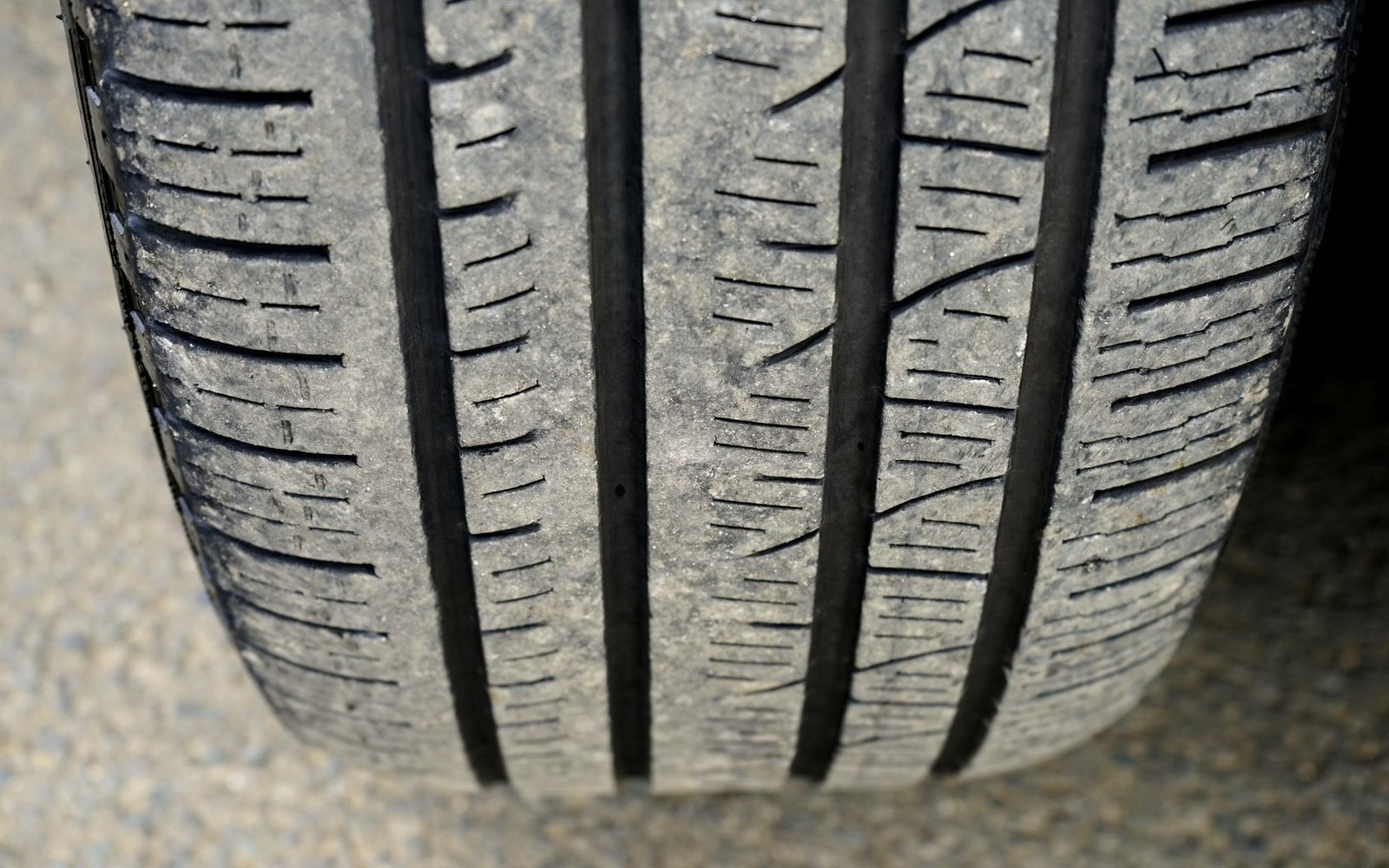
This guide is for an everyday driver who fills up with fuel, gets the car serviced when a light comes on and otherwise does not think much about tyres: a parent doing the school run, a commuter with a long motorway drive, someone who has just bought their first used car. Tyres are the only part of the car touching the road, and a few simple monthly checks make a real difference to safety and running costs.
Why tyres deserve ten minutes a month
The US National Highway Traffic Safety Administration’s TireWise guidance puts the stakes plainly. Poor tyre maintenance, such as not keeping enough air in your tyres or failing to rotate them, can lead to a flat, a blowout or the tread coming off. NHTSA reports that 511 people died in tyre-related crashes on US roads in 2024.
There is a money side too. NHTSA says properly inflating your tyres can save as much as 11 cents per gallon on fuel, yet only 19 percent of consumers properly inflate their tyres. It also says properly inflated tyres can extend the average life of a tyre by 4,700 miles.
Check the pressure, the right way
NHTSA calls proper tyre pressure the most important part of maintaining your tyres, because it affects safety, durability and fuel consumption.
Find the correct number
The right pressure for your car is set by the vehicle manufacturer. NHTSA explains that it is shown on the Tire and Loading Information label, usually on the driver’s door edge or door pillar, or in the owner’s manual. It is not the number moulded into the tyre sidewall, which is the tyre’s maximum pressure.
Check when the tyres are cold
NHTSA recommends checking all tyres, including the spare, at least once a month when they are “cold”, meaning the car has not been driven for at least three hours. Driving warms the air inside and raises the reading, so a check straight after a long drive can make an underinflated tyre look fine.
Use your own gauge
Keep a tyre pressure gauge in the car. NHTSA notes that a tyre can suddenly lose pressure if you hit a pothole or bump a kerb. Inexpensive digital gauges are easy to read and more consistent than worn forecourt gauges.
Adjust
If a tyre is low, add air until it reaches the recommended figure. If it is high, press the valve gently with the gauge to release air, then re-check.
Do not rely on the dashboard light
Cars from model year 2008 onwards in the US must have a tyre pressure monitoring system. NHTSA cautions that it only warns when a tyre is significantly underinflated and is not a substitute for monthly checks. If the warning light comes on, inspect and check your tyres as soon as possible.
The correct pressure is on the door pillar, not on the tyre. The number on the tyre is the maximum.
Check the tread
Tread gives grip, especially on wet and icy roads. NHTSA says tyres are not safe and should be replaced when the tread is worn down to 2/32 of an inch.
Use the wear indicators
Tyres have built-in treadwear indicators, raised bars in the grooves. When the tread is level with these bars, it is time to replace the tyre.
Try the coin test
NHTSA describes the penny test: place a US penny in the tread with Lincoln’s head upside down and facing you. If you can see the top of his head, replace the tyre. In other countries, the legal minimum and the suggested coin differ, so check local rules.
Look for uneven wear
Wear on both outer edges often points to underinflation; wear in the centre can mean overinflation; wear on one edge may suggest an alignment problem. Ask a tyre shop to check.
Check the tyre’s age
Tyres age even if they are rarely driven. NHTSA notes that rubber and other components change over time and that you cannot detect ageing just by looking.
Read the date code
The DOT Tire Identification Number on the sidewall ends in four digits showing the week and year of manufacture. NHTSA’s example: 0308 means the third week of 2008. The code may be on only one side, so check both.
Know the replacement guidance
NHTSA reports that some vehicle and tyre manufacturers recommend replacing tyres that are six to 10 years old, regardless of tread. Low-mileage cars, caravans, classic cars and spares are most at risk, as are vehicles kept in hot, sunny climates.
Do not forget the spare
Spares are rarely replaced and therefore often old. NHTSA recommends not using a full-size spare as a replacement for worn tyres except in emergencies.
Rotation, balance and alignment
| Service | What it does | How often |
|---|---|---|
| Rotation | Moves tyres between positions to even out wear | NHTSA says every 5,000 to 8,000 miles if the manufacturer recommends it; check your manual |
| Balancing | Stops wheels vibrating at speed | Whenever new tyres are fitted, or if you feel vibration |
| Alignment | Keeps the car tracking straight and tyres wearing evenly | If the car pulls to one side, after hitting a big pothole, or as your manual suggests |
Some vehicles with different front and rear tyre sizes cannot be rotated, so check your owner’s manual.
Buying new tyres
Match the size
NHTSA advises buying tyres the same size as the original ones or another size recommended by the vehicle manufacturer. The correct size is on the same door label as the pressure.
Choose the right type for your weather
All-season tyres handle a variety of conditions; winter tyres are more effective in deep snow; summer tyres are not designed for freezing temperatures, snow or ice.
Compare the quality grades
In the US, most passenger tyres carry Uniform Tire Quality Grading on the sidewall: a treadwear number, where higher should mean longer life; a traction grade from AA down to C for stopping on wet roads; and a temperature grade from A to C for heat resistance.
Consider rolling resistance
NHTSA estimates that a 10 percent reduction in tyre rolling resistance improves fuel economy by 1 to 2 percent. Low-rolling-resistance tyres are widely available as replacements and also extend the range of electric and hybrid cars.
Check for recalls
Tyres can be recalled. Register new tyres with the manufacturer and look up recalls through NHTSA.
If a tyre blows out
A sudden blowout is frightening, and the instinct to brake hard is the wrong one. NHTSA advises:
- Hold the steering wheel firmly with both hands
- Maintain speed if it is safe to do so
- Gradually release the accelerator; do not slam on the brakes
- Steer to stabilise the car, looking where you want to go
- Once stable, slow down gradually and pull off the road when it is safe
The ten-minute monthly routine
1. With tyres cold, check all four and the spare with your gauge.
2. Inflate to the pressure on the door label.
3. Check tread with the wear bars or coin test.
4. Look for cuts, cracks, bulges or nails.
5. Note any uneven wear.
6. Once a year, check each tyre’s date code.
Tyre care checklist
- Gauge kept in the car
- Correct pressures noted from the door label
- Pressure checked monthly, when cold, including the spare
- Tread checked monthly
- Sidewalls inspected for damage
- Date codes checked yearly
- Rotation done at the interval in your manual
- Alignment checked if the car pulls
- New tyres matched to the recommended size and your climate
- Tyres registered for recall notices
Takeaway
Tyres need very little: correct pressure checked monthly when cold, enough tread, and replacement before they are too old. NHTSA’s guidance shows the payoff in safety, fuel and tyre life. Keep a gauge in the car, use the pressure on the door label, and give your tyres ten minutes on the first weekend of every month.