Consider someone flying for the first time with only a carry-on, for a week of walking and a couple of dinners in a cool, changeable-weather city. The usual outcome is a bag stuffed with seven outfits and a pair of shoes nobody wears. To pack light for a week, you plan in outfits instead of days, build around a short colour palette, and check three airport rules before anything goes in.
This guide gives the numbers, the packing order and a checklist, and cites official sources for the rules on liquids, batteries, medicines and bag size. Airline limits vary, so confirm your own airline’s rules before the day.
How to pack light for a week: the capsule in one table
A week away needs a handful of pieces, not seven of each. This is a starting point for mixed weather, adjusted for your trip.
| Category | Quantity | Notes |
|---|---|---|
| Tops | 3 to 4 | All in colours that go with the bottoms |
| Bottoms | 2 | One can be the pair you wear on the journey |
| Layer (jumper or light jacket) | 1 | Worn or carried on the journey |
| Smarter option | 1 | One top or dress that works for a good dinner |
| Underwear and socks | 4 to 5 sets | Wash once mid-trip |
| Shoes | 1 worn, 1 packed at most | Wear the bulkiest pair |
| Liquids | Containers of 100 ml or less | TSA rule (US); check your own airport |
| Power bank | Cabin bag only | TSA (US) |
Start with the forecast and the plan
Check the forecast for the week and list what you’ll actually do: long walks, a meeting, one nice dinner. Pack for those activities and not for every possibility. If the forecast shows a 10-degree swing between morning and afternoon, a thin layer you can add or remove is worth more than a heavy coat.
Check where you’re staying too. If the accommodation has a washing machine, or a laundrette is nearby, you can pack for four days and wash once. If it doesn’t, plan to hand-wash small items in a sink and hang them overnight.
Count outfits, not days
A tight palette multiplies what you can wear. Pick two or three neutral colours that go together, such as navy, grey and cream, and one accent.
Example: 3 tops and 2 bottoms all in matching tones give 3 x 2 = 6 outfits. Add one layer worn on top or left off and that doubles to 12 looks, without packing a single extra garment. Seven tops in seven unrelated colours weigh more and match less.
Choose fabrics that dry quickly and don’t crease easily, because the plan only works if you can wash something halfway through and wear it the next morning.
Choose the bag first
Size the bag before you size the pile. IATA gives 56 x 45 x 25 cm, including wheels and handles, as a general reference for the maximum dimensions many airlines apply to carry-on baggage, and it says baggage allowances and conditions of carriage remain airline specific (IATA). That’s a figure many carriers use, not a universal rule, so your airline’s own page is the one that counts.
Example: a hard box of exactly those dimensions would hold 56 x 45 x 25 = 63,000 cubic centimetres, or 63 litres. A real bag with wheels, handles and soft sides holds less. Measure your own bag, including the wheels, and compare it with your airline’s page.
Packing order
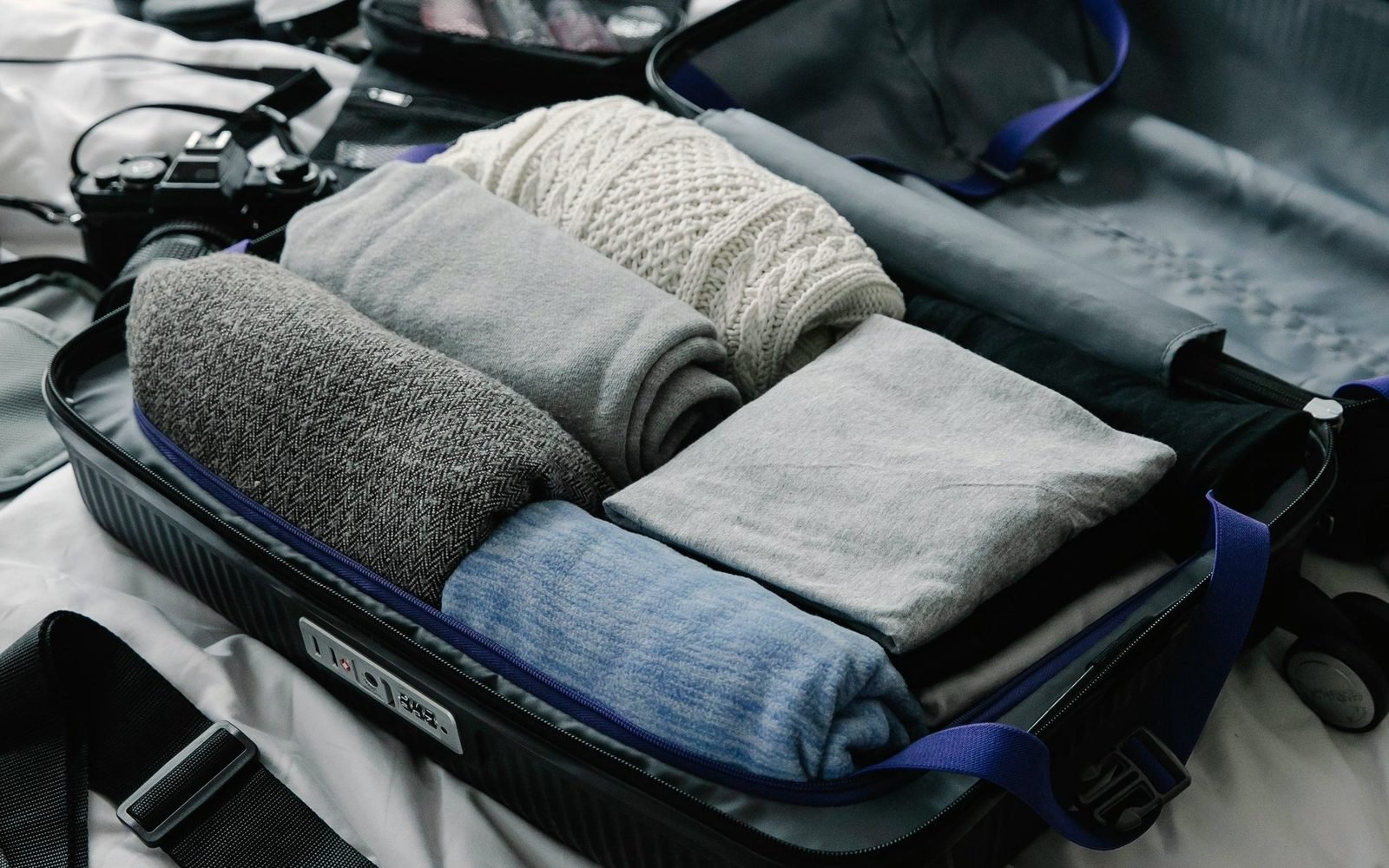
- Lay everything out on a bed and put back one item in every four.
- Roll soft items or fold them into a packing cube, so you can find things without unpacking.
- Put heavy items, such as shoes and a toiletries bag, near the wheels or at the back panel.
- Fill gaps with socks and underwear.
- Keep the documents and the things you need in the air in a small bag under the seat.
- Weigh the bag and leave a little room for something you buy.
Liquids, medicines and batteries
Liquids
The US Transportation Security Administration lets you bring a quart-sized bag of liquids, aerosols, gels, creams and pastes in your carry-on, limited to containers of 3.4 ounces (100 ml) or less per item (TSA, US). Other airports have similar rules, so check the one you’re leaving from. Solid shampoo and conditioner bars, toothpaste tablets and a small tube of sunscreen leave room in the bag, and anything bulky can be bought at the destination.
Medicines
TSA allows larger amounts of medically necessary liquids, gels and aerosols in reasonable quantities for your trip, and says you must declare them to officers at the checkpoint (TSA, US). UK travel-health guidance says to carry medicines in their original pharmacy packaging, keep them in hand luggage with some extra in the hold, and pack enough for the whole trip including delays (TravelHealthPro, UK). Some countries restrict certain medicines, so check the rules for your destination first.
Batteries
Portable chargers with a lithium-ion battery must be packed in carry-on bags, and spare lithium batteries, which include power banks and phone chargers, are prohibited in checked luggage (TSA, US). Because spare lithium batteries can’t go in the hold, take the power bank out of your bag if it’s ever checked at the gate.
Shoes: the biggest space decision
Shoes take up more room than almost any other item. Wear the bulkiest pair on the flight and pack at most one more pair, chosen for a clear purpose. The NHS advises wearing comfortable, well-fitting shoes and wearing new shoes for short periods until they’re comfortable (NHS, UK). So the pair you bring should have been worn for at least a few short walks before you go.
Keep documents and essentials within reach
Put your passport, tickets, medication, a charger and a spare layer in an easy-to-reach pocket. The CDC lists copies of your passport and travel documents among the things to pack (CDC Travelers’ Health, US), so photograph the main pages and store the files somewhere secure. If your bag is ever checked at the gate, you’ll still have what you need.
A bag that closes easily on day one is a bag that still closes on day seven with a souvenir in it.
Your pack-light checklist
- Forecast checked and the week’s activities listed
- Palette chosen: two or three neutrals plus one accent
- 3 to 4 tops, 2 bottoms, 1 layer and 1 smarter option
- 4 to 5 sets of underwear and socks, with a wash planned
- Bulkiest shoes worn on the journey, at most one other pair, all worn in
- Liquids in containers of 100 ml or less, or swapped for solid versions
- Medicines in original packaging, with a copy of the prescription, in the cabin bag
- Power bank and spare batteries in the cabin bag only
- Bag measured against your airline’s page, with wheels included
- Passport, tickets, charger and a spare layer in an easy-to-reach pocket
- Room left for something you buy
Common mistakes
The first is packing for the trip you imagine, not the one you booked. A formal outfit, a swimsuit and hiking boots for a week of city walking add weight for events that may not happen.
The second is relying on a general size rule instead of the airline’s own page. IATA says carry-on allowances may vary by airline, cabin class and aircraft type, so measure against the carrier you’ve booked.
The third is leaving the packing to the night before. A trial pack the weekend before shows you what doesn’t fit, while there’s still time to buy a small travel bottle.
The takeaway
Pick a palette, count outfits, and let the airline’s bag limit set the size of the pile. Keep liquids small, medicines and batteries in the cabin, and one pair of shoes on your feet. Leave a little space in the bag, and the week is easier at both ends.